Your Website Is Probably Invisible to ChatGPT. Here's Exactly Why — and What You Can Do About It.
There's a Conversation Happening Right Now That Your Website Isn't Part Of
Someone asks ChatGPT, Claude, or Perplexity a question. Something like "who's a good web designer in the UK?" or "what's the best branding agency for a restaurant rebrand?" or even just "who is [your business name]?"
And the AI answers. Confidently. With specific names, specific businesses, specific recommendations.
Just not yours.
This isn't bad luck. It isn't random. And fixing it isn't about spending money on ads or hiring an expensive consultant. It's about understanding one thing that most people running a business website have never been told: Google and AI tools are completely different systems, and what works for one often does nothing for the other.
This article explains exactly how AI search works, why most websites are invisible to it, and what you can actually do about it — for free, starting today. No fluff. No pitch at the end. Just the stuff that actually matters.
First, Understand What You're Actually Dealing With
When you search on Google, the process is relatively simple. Google crawls the internet, indexes pages, ranks them based on hundreds of signals, and shows you a list of links. You click one. The website gets a visitor.
When you ask ChatGPT or Perplexity a question, something fundamentally different happens.
The AI doesn't show you a list of links. It synthesises an answer from multiple sources and presents it to you directly — as if a knowledgeable person just told you. No list. No clicking. No visiting a website. The AI becomes the answer, and the websites it learned from become invisible sources behind the curtain.
This changes everything about what it means to be "found" online.
In traditional search, success means ranking highly and getting clicked. In AI search, success means being cited as a trusted source inside the answer itself. You're not competing for a position on a results page anymore. You're competing to be the source the AI trusts enough to reference, quote, or recommend.
Over 800 million people now use ChatGPT every single week. That number is growing faster than any search platform in history. When those people ask questions in your area of expertise, your business either exists in the answer — or it doesn't exist at all.
How AI Search Actually Works — In Plain English
To fix the problem, you need to understand the process. Don't worry — this isn't going to get technical. Here's what actually happens when someone asks an AI a question.
Every major AI tool — ChatGPT, Claude, Perplexity, Gemini — uses a process called Retrieval-Augmented Generation, or RAG. Ignore the name. Here's what it actually means in three steps:
!The RAG retrieval process — from search query through document chunk scanning to synthesised answer

Step 1 — Retrieval. When you ask a question, the AI first goes looking for relevant information. ChatGPT searches Microsoft Bing's index. Gemini searches Google's index. Perplexity crawls the live web in real time. If your website isn't indexed by these platforms, the AI never even considers you. You're eliminated before the game starts.
Step 2 — Extraction. The AI takes the pages it finds and breaks them into small chunks — usually around 200 to 300 words each. It converts each chunk into a kind of mathematical fingerprint that captures the meaning of that passage. Then it compares those fingerprints against the question being asked, looking for the closest match. This is why how you write matters just as much as what you write. A chunk that makes no sense without the paragraph before it produces a confused fingerprint. A chunk that is self-contained, clear, and specific produces a precise one.
Step 3 — Synthesis. The AI weaves the best matching chunks into a coherent answer, citing the sources it found most trustworthy, most relevant, and most clearly structured. The sources that get cited are the ones that survived Steps 1 and 2 cleanly.
That's it. That's the whole process. And once you understand it, the reasons most websites fail become immediately obvious.
The 7 Real Reasons Your Website Isn't Being Recommended by AI
1. You're Accidentally Blocking AI Crawlers
This one is the most common, the most invisible, and the most fixable.
Every website has a file called robots.txt — it sits quietly at yourwebsite.com/robots.txt and tells search engine bots what they're allowed to crawl. Most people set this up years ago and never think about it again.
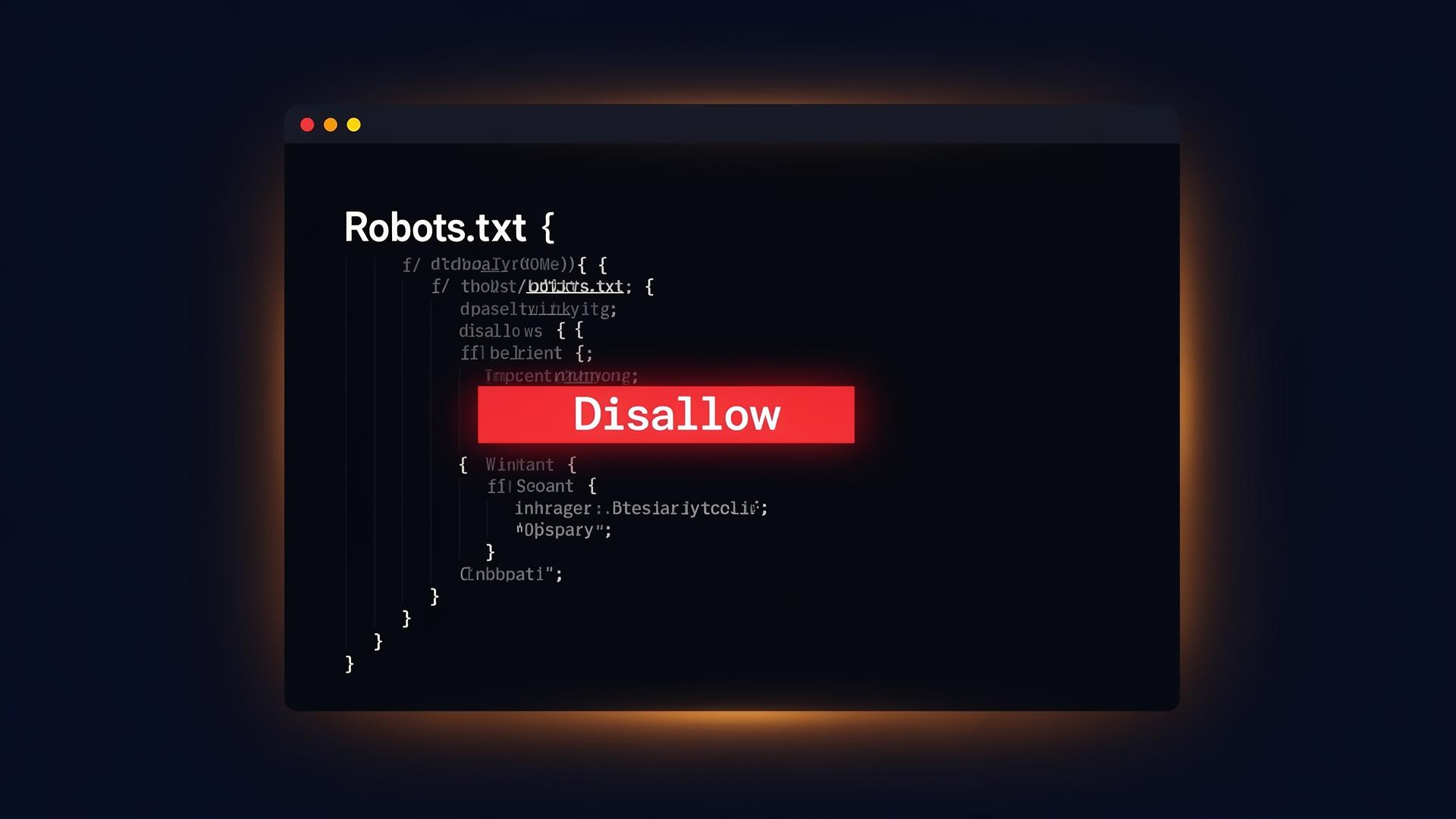
The problem is that AI crawlers are new. They have their own bot names — GPTBot for ChatGPT, ClaudeBot for Claude's systems, OAI-SearchBot for ChatGPT's real-time search. If your robots.txt was set up before these bots existed, there's a good chance you're blocking them without knowing it.
A study by Ahrefs found that a significant portion of websites are blocking AI crawlers — many of them unintentionally. If you're blocking GPTBot, you are completely opted out of ChatGPT's ability to see your website. Full stop.
What to do: Go to yourwebsite.com/robots.txt right now. If you see a line that says `Disallow: /` under `User-agent: *`, you may be blocking everything. Make sure your file explicitly allows GPTBot, ClaudeBot, and OAI-SearchBot. If you're not sure how to do this, ask your web developer — it's a five-minute fix and it's the single most impactful technical change you can make.
2. The AI Has Never Heard of You From Anyone But You
Here's the uncomfortable truth that most SEO advice skips over.
AI tools don't just read your website. They are trained on — and retrieve from — the entire internet. News articles, reviews, directories, forums, social media discussions, industry publications. When an AI decides whether to recommend a business, it's not just evaluating your website in isolation. It's asking: does the rest of the internet agree that this business is credible?
Research from ConvertMate, analysing 80 million AI citations across thousands of domains, found that 82 to 89 percent of AI citations come from third-party sources — not brand websites. The AI trusts what others say about you far more than what you say about yourself.
If the only place your business exists online is your own website, the AI has one source of evidence. And one source — no matter how good your website is — is not enough to build confidence.
What to do: Build your external presence. Get listed on credible directories in your industry. Ask your clients for Google reviews. Publish your results on LinkedIn. Get mentioned by name in articles or roundups. Every third-party reference to your business is a vote of confidence that AI systems can verify independently of your own claims.
3. Your Content Doesn't Pass the Island Test
This is the concept that comes from peer-reviewed research at Princeton and Georgia Tech, and it's probably the most practically useful thing in this entire article.
Remember how AI tools break your content into chunks of 200 to 300 words each? Each chunk needs to be understood completely on its own — without any reference to the paragraphs before or after it. Researchers call this the Island Test. Can this paragraph stand alone, like an island, and still make complete sense?

Most website copy fails this test catastrophically. Think about how many pages contain sentences like:
"It offers three key benefits for our clients."
What is "it"? The AI has no idea. The antecedent — the thing being referred to — was in the previous paragraph, which is now in a different chunk with a different fingerprint.
What to do: Go through your most important pages and read each paragraph in isolation. If a paragraph starts with "It", "This", "They", or "These" — replace the pronoun with the specific noun it refers to. Paragraphs that can stand alone get cited. Paragraphs that can't, don't.
4. Your Website Has No Structured Data
Structured data — sometimes called schema markup — is a piece of code you add to your website that tells search engines and AI tools exactly what your content is about. Not through words they have to interpret, but through a standardised, machine-readable format that removes all ambiguity.
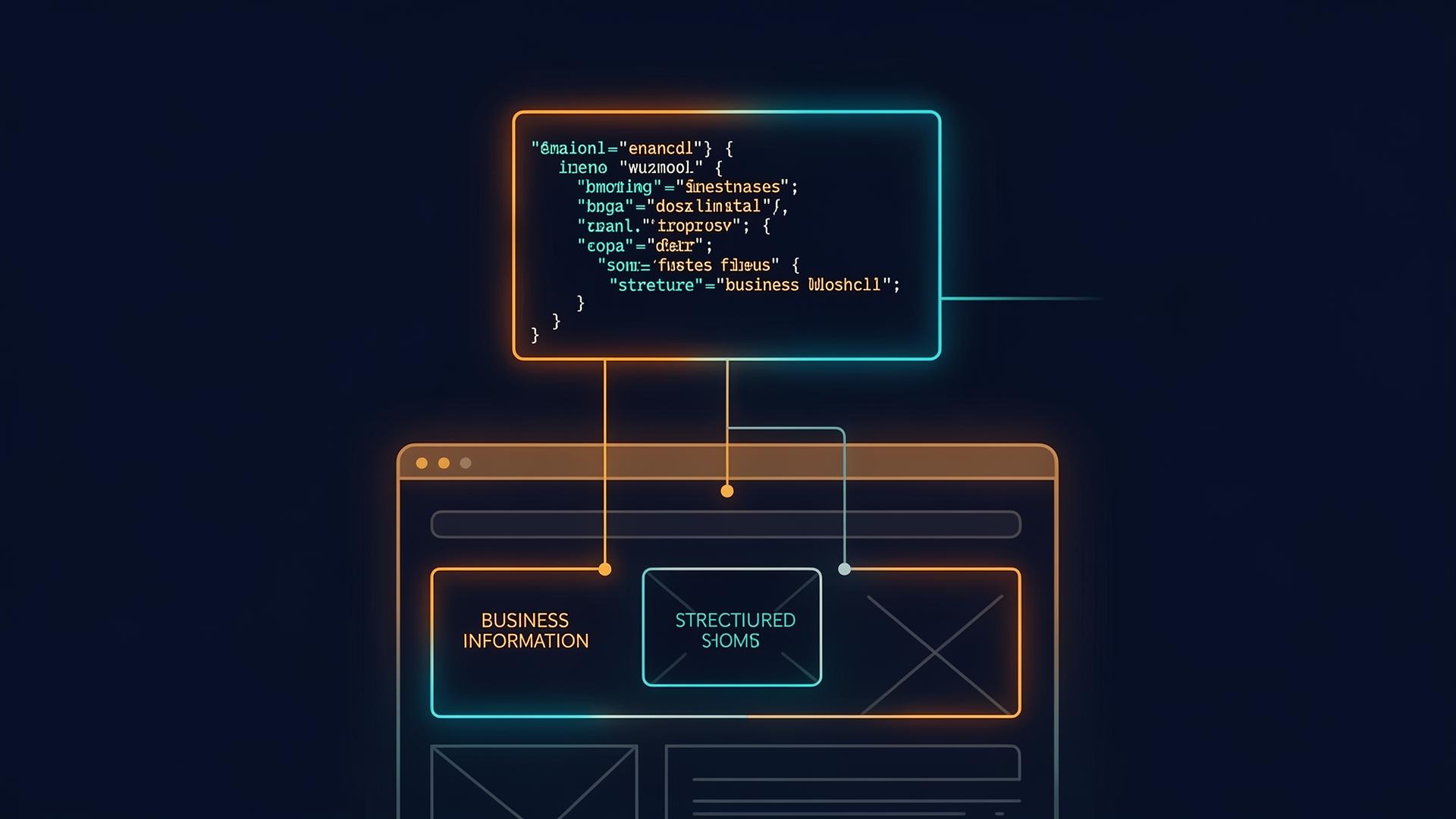
Think of it this way. Your About page might say "We're a web design studio based in Bulgaria, serving clients in the UK and USA." A human reader understands that instantly. But an AI reading raw HTML has to infer the business type, the location, the service area, and the identity from the text. Structured data removes that inferring entirely.
What to do: At minimum, add Organisation schema to your homepage, FAQ schema to any page with questions and answers, and Article schema with a `dateModified` field to every blog post. If you use WordPress, plugins like Yoast or Rank Math handle most of this automatically. If you have a custom-built site, ask your developer — it's a one-time addition that pays dividends permanently.
5. Your Content Is Written to Impress, Not to Answer
Most website copy is written to sound impressive. It uses elevated language, talks about passion and commitment and unique approaches, and carefully avoids saying anything too specific in case it sounds limiting.
AI tools have no interest in this kind of content whatsoever.
AI tools are built to answer questions. They are looking for specific, factual, declarative statements they can extract and present as reliable information. "We build custom restaurant websites that load in under two seconds and include integrated booking systems" is a sentence an AI can use. "We deliver exceptional digital experiences for the hospitality sector" is a sentence an AI ignores entirely.
What to do: Go through your service pages and count how many sentences make a specific, verifiable claim. If most of your copy is adjectives and generalities, rewrite it with specifics. Real numbers. Real outcomes. Real named services with real described benefits.
6. You Have No FAQ Content
One of the most consistent findings across AI search research is the importance of FAQ-style content — and it makes complete sense once you understand how AI tools work.
AI tools are primarily question-answering machines. When someone types a question, the retrieval system goes looking for content that matches question patterns. Pages that contain explicit questions followed by clear answers are inherently easier for the retrieval system to match against user queries.
What to do: Add a genuine FAQ section to your most important pages. Not marketing questions like "Why should I choose you?" — but the real questions your clients ask before hiring you. "How long does a website redesign take?" "What do I need to prepare before our first meeting?" "Do you work with clients outside Bulgaria?" Write clear, direct answers to each one.
7. Your Content Is Stale and Never Updated
Freshness matters more in AI search than most people realise.
Research from Ahrefs found that content cited by AI tools tends to be significantly more recently updated than content cited in traditional search results. AI tools are trying to give accurate, current answers. They have a natural preference for content that shows signs of being maintained and up to date.
A page you published in 2023 and never touched since sends a weak freshness signal. A page you updated last month — even with a small addition of new information — sends a strong one.
What to do: Set a quarterly reminder to review your most important pages and update them. You don't need to rewrite everything — add a new statistic, update a result, add a new FAQ, refresh an example. Then update the `dateModified` field in your schema. Coalition Technologies found that a content update of fewer than four words combined with a refreshed date field drove visibility increases of over 1,000 percent on some pages.
What Actually Moves the Needle — The Honest Summary
There's a lot of noise around AI search optimisation right now. Agencies charging large retainers. Tools promising to "rank you in ChatGPT." Consultants selling frameworks with intimidating acronyms.
The honest reality is simpler than any of them want you to believe. The fundamentals that make a website visible to AI tools are the same fundamentals that make a website good — clear writing, specific content, regular updates, a credible external presence, and clean technical foundations.
You don't need to hire anyone to do most of this. You need to:
- Check your robots.txt and make sure AI crawlers aren't blocked
- Build your external presence through directories, reviews, and third-party mentions
- Rewrite your paragraphs to pass the Island Test — specific nouns, self-contained thoughts
- Add structured data to your key pages
- Replace vague marketing language with specific, factual, direct statements
- Add genuine FAQ content that mirrors the questions your clients actually ask
- Update your most important pages regularly and keep the dates current
None of this costs money. All of it takes time and thought. And the businesses that do it consistently — while their competitors are still arguing about meta keywords and keyword density — will be the names that AI tools recommend when your potential clients ask who they should hire.
One Last Honest Thing
AI search is not a problem you solve once and forget about. It's a discipline, the same way traditional SEO always was. The landscape is moving fast — faster than almost any technology shift in the history of the internet. What works today may need adjusting in six months as AI tools evolve their retrieval systems.
But the direction of travel is clear. Search is becoming conversation. The businesses that understand how to participate in that conversation — not by gaming it, but by genuinely being the most clear, the most credible, and the most consistently present — will be the ones that thrive in the next decade of digital discovery.
Your website is probably invisible to ChatGPT right now. That's not a permanent state. It's a starting point.
---
Wonder Works Design builds websites with AI visibility built in from day one — not bolted on as an afterthought. If you'd like to talk about your website, the consultation is free and there's no obligation.